
Popular and unusual bulbs for bees, shade, pots and which to choose that won't be taken by squirrels
Every autumn, gardeners split into two camps: those who bury a few dozen Tulips in October and hope for the best, and those who treat bulb season like a masterclass in seasonal theatre.
The beauty of bulb planting is that it can help create a garden that wakes up in the new year with impact and keeps performing well into summer. And the best part is that bulbs are relatively inexpensive. Crocus‘, for example, are currently being sold at £20.00/100 bulbs!
Plus we’re covering all the tricky topics such as bulbs for shade as well as how to keep squirrels at bay. Finally, we’ll hopefully be introducing you to some new bulbs which both you and the bees can enjoy.

The Lifeline Bulbs: Planting for Hungry Queen Bees
First and foremost, let’s give some consideration to who might really stand to benefit from your bulb planting efforts and that is, of course, the local wildlife.
When spring’s first warm afternoon arrives (sometimes as early as February here in Suffolk), queen bumblebees will start to emerge from their underground hibernation.
Actually the Bumblebees Conservation Trust reports that since the 1990’s, there have been increasing sightings of buff-tailed bumblebees through the winter. If you spot any bees between November and January, it can help research into this trend if you have time to report sightings which can be done here: https://irecord.org.uk/

Bulbs for Bees
Assuming they have just emerged from hibernation, bees are typically famished, exhausted, and on a solo mission to establish a new colony. And bees aside, I think by February, most of us are deeply yearning for winter to end and so the sight of new plants poking through is a most welcome one. With this in mind, make sure to add early flowering daffodils such as Narcissus ‘February Gold’ to your shopping basket.
Whilst there are some beautiful double-petaled tulips out there, they often yield low or no accessible pollen or nectar for bees. So to transform your garden into an early-season sanctuary, aim for these high-nectar powerhouses:
Crocus tommasinianus:
These are the absolute gold standard for early queen bees. They bloom early, open wide in winter sunshine, and naturalise easily in lawns.
Cutting through the jargon, ‘naturalising’ means they spread but generally the term is used to mean in an non-invasive habit. The result tends to be gentle drifts which are ‘natural’ in their creation and appearance. Basically, over time, you’ll get more plants without that being a problem.
A final word on Crocus’: If you’re planting in a pot, you can leave the foliage to cascade over the side for a delicate touch after the flower has faded.
Crocus tommasinianus is also meant to be more resistant to being pilfered by squirrels who dislike the taste (allegedly) so it really ticks all the boxes!
Fritillaria meleagris
Flowering in April, Fritillaria actually depend on bumblebees to pollinate.
Iris reticulata:
These are a personal favourite with wonderful deep violet and purple hues. Unlike summer flowering Iris’, they typically only grow to around 15cm. As a rule of thumb, the taller the iris, the later it will flower. They are best grown in gravel or pots.

Puschkinia scilloides
Pretty star shaped flowers which naturalise well and will take some shade. They are not as well-known as others on the list but perfectly hardy and hold the RHS’s ‘Award of Garden Merit’ (only given out to plants which perform well reliably).

Bulbs for shade or part shade
Camassia
Shady corners and damp clay soil are where many prized bulbs (looking at you, tulips) rot away. Enter Camassia which is absolute favourite for dappled shade, woodland edges, or heavy soil that stays moist in spring. Actually we’ve found this will some sun so long as the ground doesn’t get too dry.
In the image, you can see Camassia leichtlinii ‘Alba’ with a happy bee against a back drop of Brunnera ‘Jack Frost’. The magnolia tones of the Camassia complement the white edging on the Brunnera which results in a better sense of cohesion to the garden design.
Why it works: Tall, stately spires of starry blue or creamy white flowers unfold gradually over several weeks giving a good prolonged display in late spring.
Erythronium ‘White Beauty’
I’m sure this must be a contender for ‘daintiest’ bulb. Lower in height at c15cm, this is an extremely easy bulb to grow so long as the ground is moist enough. It will naturalise too.
Corydalis solida:
Another bulb which, for some reason, isn’t as popular as it should be. However, with it’s delicate ‘Aquilegia‘ style foliage, Corydalis performs best on a woodland edge (also similar to Aquilegia which goes to show how much a plant can tell you through it’s leaf. A tip to bear in mind when you’re next browsing at the plant centre).
As you can see from the image on the right, it’s also a popular choice for early emerging bees.

Getting the Ratios Right: Impact Without Overcrowding
One of the most common bulb blunders is either planting in timid little “clumps of three” or blanket-bombing a border so heavily that emerging summer perennials get completely smothered. And certainly, if you have an established border and you Google ‘bulb quantities’, the answers given can seem confusing (most answers are those being pushed out by bulb stockists!).
Quantity will depend on available space of course. We plant bulbs very close to one another, they shouldn’t touch but having them in close proximity is perfectly fine. Then selecting where to place your bulbs is something to think about now (late summer or early autumn). There are plenty of plants which can be a little slower to emerge in the summer.
For instance, Hostas (part-full shade), Perovskia (now re-named Salvia ‘Blue Spire’ or S. ‘Little Spire’) or Baptisia australis. Around these plants are perfect spots for spring bulbs as you’ll be filling those early gaps for stronger successional interest in the garden.

Protecting Bulbs from Squirrels
Deep Planting can help safeguard against Pest Dig up
If squirrels keep raiding your beds, bury your bulbs slightly deeper than the standard rule of thumb (aim for 3-4 times the bulb’s height for narcissus and tulips).
Some bulbs can go even deeper. Did you know that if you plant tulips deeper in the ground that they’ll have longer stems? Tulips should be fine as deep as 30 cm in the ground so long as the soil isn’t too heavy.
Consider the flavouring
We’ve had several successful reports from clients who have marinaded their bulbs in chilli flakes or cayenne powder for a day or two ahead of planting.
Use Wire
If you’re planting in pots then chicken wire laid over the top of the pots will help deter squirrels. Secure with long tent pegs. An additional top up of chilli flakes won’t hurt although you need to pretty generous with the quantity.
Unfortunately, once squirrels know about your bulbs, it can be hard to deter them. I’ve seen some elegant cloches made from hazel and Cornus (dog-wood) on larger pots if you are feeling particularly creative!
Adding a layer of Pine Cones
Not as effective a deterrent against a determined squirrel as wire but less unsightly and worth trailing if your rodent problem isn’t too much of a challenge. A continuous layer will be required for this to work to best effect.


Change the bulb
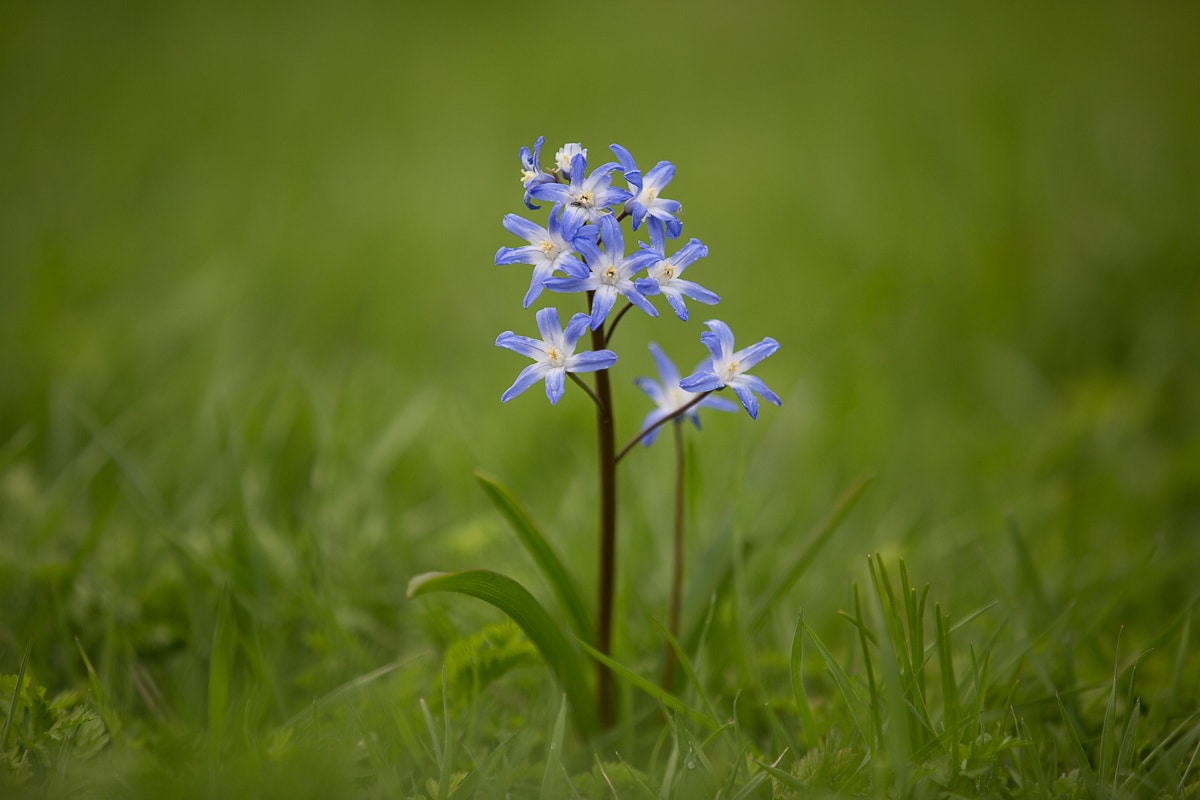
If your squirrel problem is truly a nightmare scenario then you may have to revisit which bulbs you’re using. For instance, planting Chionodoxa (see image below) instead of Crocus.
Other squirrel-proof bulbs are Daffodils, Fritillaria, Colchicum, Galanthus (snowdrops), Hyacinth and Scilla.
Offer the squirrels an alternative
The pattern for most squirrels is to set off in the morning and collect food for hibernation. So instead of your bulbs being the nearest tasty offering, why not scatter other food instead? Walnuts are a highly prized food. A scattering of walnuts every few days could satiate a squirrels morning quest. With a bit of luck, you may even attract a very dominant squirrel which then looks to protect their patch and fend off your prized tulips from other squirrels!

Top Tips for Bulb Planting in pots:
· Ensure the drainage hole is clear
· Add a slow release fertiliser such as blood, fish and bone. A few handfuls well mixed in should do the trick.
· Go for bulb lasagne planting if you have a large pot. Typically this will include three layers with c10cm of compost in between each layer. Usually tulips are the lowest layer and we like Crocus’ for the top layer.
· Don’t let any bulb touch its neighbour
· Anything below the bottom layer should just be compost.
· Ensure there is at least 5cm of compost over the pots drainage material.
· After all your bulbs have bloomed, they can be lifted and stored for next year. Bulbs such as Crocus’, Iris’ and Hyacinths will do best if the foliage is still attached and hung dry in an onion bag.
Alliums
Finally, Alliums offer a fantastic the bulb finale and with so many cultivars out there, it’s possible to have a regular Allium display from April through to July.
Our current favourite is Allium ‘Silver Spring’ which flowers May-June and grows to a good height of c75cm. Favoured for its delicate colouring. We’re also fans of Allium ‘Forelock’ which reaches a rather dramatic 90cm in peak summer. Pops of these weaving through the borders can be extremely impactful.
Foliage: To trim or not to trim?
There’s mixed information out there regarding trimming foliage. By the time the plant is in flower in early summer, the leaves can look tatty. It won’t do the plant any harm to trim these off. The plant will have gained all the energy it needs for next years show so trim away!
Enjoying Your Alliums long after the season ends
Our final tip which many may be aware of, but we love to collect the faded seed heads. These will easily snap off once they’ve turned brown without damaging the bulb. The can then be sprayed or left as they are for internal winter decoration.


We hope this blog has given you ideas or insights into common problems when it comes to bulb selection, planting time and groupings. If you’d like some assistance in getting ready for this seasons bulb planting window then feel free to get in touch.